
If you've been diagnosed with a hernia, you may feel anxious about the surgery ahead, relief that you finally have answers, or simply curiosity about what comes next. Today's surgical options for hernia repair are minimally invasive compared to procedures of the past,1 keeping your comfort and recovery top of mind.
Whether you're dealing with a hernia that's been causing discomfort, or you've been managing symptoms and are ready to take action, understanding your treatment options can help you feel more confident about the journey ahead.
Open Repair: The Traditional Approach That Still Has Its Place
An open repair is the time-tested surgical method that many surgeons still prefer for certain situations—think of it as the traditional approach. Here’s how it’s performed:
- The surgeon makes an incision at the site of the hernia, and pushes the protruding tissue back into place.2
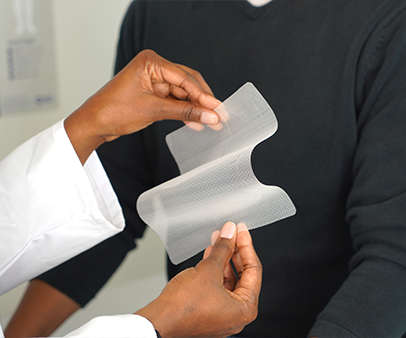
- During this procedure, if the surgeon uses mesh (which is common and helps minimize complications), it's carefully placed between the layers of muscle tissue.3
- After putting the tissue that had come through the hernia opening back behind the abdominal wall where it belongs, the surgeon repairs the weakened area and closes the opening with stitches, staples, or surgical glue.2
When Might an Open Repair Be Recommended?
Open repair may be appropriate for very large or complex hernias, patients unable to have general anesthesia, or in situations where a quick, local-anesthetic repair is desired. Your surgeon will discuss which option best fits your specific situation.4
While open repair surgeries may require more recovery time compared to minimally invasive options, they remain an excellent, reliable choice for many patients. Ask your surgeon about the expected recovery timeline for your surgery because it may vary based on factors like the size of your hernia, your overall health, and how well you follow post-operative care instructions.5
Laparoscopic Repair: The ‘Keyhole’ Revolution
Laparoscopic repairs represent one of the biggest advances in hernia surgery over the past few decades. Instead of one larger incision, the surgeon makes several small ‘keyhole’ incisions—typically just a few millimeters each. Here's how it works:
- The surgeon inserts a small camera (called a laparoscope) and specialized minimally invasive instruments through these tiny incisions.5
- To create enough space to work, the abdomen is gently inflated with carbon dioxide gas or a balloon.6
- Once the surgeon can see clearly inside and has maneuvered the hernia contents back to their natural position, a mesh is typically placed on the inner side of the gap to reinforce the weakened area of your abdominal wall from behind.6
How Does Laparoscopic Surgery Impact Recovery?
Because the incisions are so much smaller than in open surgery, many patients find they can return to their normal activities sooner. Some may experience less post-operative pain, have a shorter hospital stay, and see less scarring. However, every patient is different, so be sure to ask your surgeon about the expectations for recovery in your specific case.6
Robotic Repair: Hernia Surgery Innovation1,5,7
Robotic hernia repair might sound like something from a science fiction movie, but it's an evolution of laparoscopic surgery that's becoming increasingly common. Like laparoscopic repair, it uses small ‘keyhole’ incisions. During a robotic repair:
- The surgeon sits at a specialized console that controls robotic surgical instruments.
- The system provides three-dimensional, high-definition imaging from inside your body, giving the surgeon an enhanced view of the surgical area.
- The procedure itself is like laparoscopic repair. The hernia contents are returned to their natural position, and a mesh reinforcement patch is typically placed to support the repair from behind the abdominal wall.
When Would Robotic Surgery Be Appropriate?7
Robotic instruments can be beneficial in cases where the surgeon needs a clearer view of the hernia or when the hernia is difficult or complex. Like laparoscopic surgery, patients may experience faster recovery times with robotic surgery compared to open surgery.
Conclusion
Remember, there's not a one-size-fits-all solution when it comes to hernia repair. What matters most is having an open, honest conversation with your surgical team about your concerns, expectations, and goals. Don't hesitate to ask questions. Understanding your options empowers you to be an active participant and have shared care discussions with your healthcare provider.
The journey from diagnosis to recovery might feel overwhelming, focus on preparing for your procedure, following your surgeon's instructions, and looking forward to getting back to normal everyday activities without the discomfort from your hernia.
Connect with a hernia surgeon near you today to start the surgical discussion.
The guidance provided in this article follows general rules that should be discussed with your doctor. This article is for informational and educational purposes only. It does not substitute for medical advice. If in doubt, always consult your doctor.
Related Articles


Join the HerniaInfo.com community! Get notified about our latest articles and updates on all things hernia as they become available.