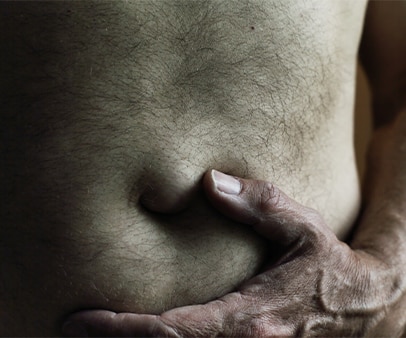
You can do a simple self-check, but you won’t be able to confirm a diagnosis. Lie on your back with your knees bent and feet flat on the floor. Lift your shoulders slightly and use your fingers to feel for a gap between the abdominal muscles. If you notice a gap of 2 or more finger widths, contact your healthcare provider for an evaluation.1
Yes. Although diastasis recti is most common during and after pregnancy, it can affect anyone. Men may develop diastasis recti due to chronic straining, heavy lifting, constipation, or significant weight changes.1
Diastasis recti and hernias are different conditions, but they can be related. Both affect the abdominal wall, and an umbilical hernia can develop as a complication of diastasis recti.1