
Have you ever wondered, “How can I get a non-mesh hernia repair?” Most people think of mesh when it comes to hernia repair surgery—specifically synthetic (plastic) mesh. Others may recall a traditional, non-mesh (or ‘tissue’) repair method that relies on the patient’s tissue and some sutures. However, those two options no longer represent the full spectrum of hernia care. This blog takes you through the advantages and disadvantages of non-mesh hernia repair in addition to a new technological middle ground. As always, be sure to ask your doctor if you have any questions about any of the information in this blog.
What Is Non-Mesh Hernia Repair?
Non-mesh hernia repair involves closing the hernia defect using tissue from the patient’s own body, typically by suturing the weakened or torn muscle and fascia layers back together. This approach has been used for over a century and was the primary method of hernia repair before the introduction of synthetic mesh materials in the 1950s and 60s.1
The most common non-mesh techniques include Bassini repair, Shouldice repair, and McVay repair for inguinal hernias, each named after the surgeon who developed it. These methods focus on reinforcing the natural anatomy using careful tissue manipulation and strategic suturing patterns.
Shouldice Repair: This method involves the careful sewing of distinct anatomical layers together in four layers using a permanent suture. It’s known for being a strong, reliable repair without using mesh.2
Bassini Repair: In this type of hernia repair, the surgeon strengthens the area by stitching nearby muscles and tissue together to close the weak spot. It’s one of the earliest techniques and focuses on rebuilding the area using the patient’s own tissue.3
McVay Repair: A type of inguinal hernia surgery that carefully restores the natural structure of the groin. During the procedure, the surgeon strengthens the area by stitching muscle and supportive tissue to a strong ligament near the pubic bone. This approach is designed to create a lasting repair by closely following the body’s original anatomy.4
Potential Advantages and Considerations of Non-Mesh Repairs
One potential advantage of non-mesh repair is the elimination of mesh-related complications, such as pain, mesh migration, erosion, and the rare but serious mesh infections that can be difficult to treat.5,6,7 Also note that some of these complications, such as pain and infection, can occur without mesh. The actual operation and recovery process may also be different since there’s no foreign material for the body to incorporate. Surgical procedure type (robotic, laparoscopic, or open) can impact surgical complication risks, as well.
However, tissue repairs generally have higher hernia recurrence rates than hernia repairs with mesh, particularly for larger hernias or in patients with risk factors like obesity, smoking, or connective tissue disorders. Non-mesh hernia repairs also require meticulous surgical technique and may have longer operative times. It is also important to note that some complications, such as infection, can still occur without mesh.
When Is Non-Mesh Repair Preferred?
While mesh repair has become prevalent due to lower recurrence rates, improved patient outcomes, decreased operating times, and quicker recovery,8 there are some scenarios where a surgeon may prefer non-mesh repair:
- Contaminated or infected areas where the hernia exists present one situation in which a surgeon may recommend a non-mesh repair. When there's active infection, bowel perforation, or significant contamination, placing foreign material in the area carries a risk of chronic infection and complications.9
- Patient preference and beliefs may lead a surgeon to perform a non-mesh repair if a patient requests to avoid foreign materials or skins in their body, whether for personal, cultural, or religious reasons.
Potential Advantages and Considerations of Mesh Repairs
The potential advantages of mesh repair include a reduced risk of hernia recurrence (with chances decreasing by almost 50%)8 and decreased operative time which can lead to improved recovery, allowing patients to resume normal activities more swiftly.7
However, some patients may experience mesh-related complications. The risk is very low, but unpredictable for any given individual.10 These complications can include chronic pain, infection, or mesh migration and can sometimes necessitate additional treatments, including revision surgery. Certain individuals might have sensitivities or allergic reactions to specific mesh materials, which could lead to complications.10
Bioabsorable Mesh: A Great Middle Ground11
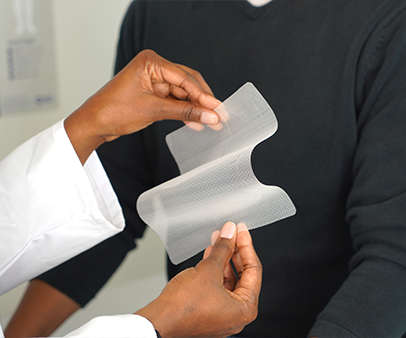
The emergence of bioabsorbable technologies over the past decade has introduced another category of hernia repair—one that combines structural reinforcement with the body’s healing process. Bioabsorbable mesh is a type of surgical mesh designed to temporarily support the healing tissue. Over time, it dissolves and is absorbed by the body, leaving no permanent foreign material behind.
Potential Benefits:
- Healing: By gradually dissolving, bioabsorbable mesh allows the body's own tissue to take over the reinforcement and recovery process.
- No Permanent Foreign Material: Since bioabsorbable mesh is absorbed over time, there is no permanent implant. The body will rely on its own tissue growth to keep the repair strong.12
Potential Disadvantages:
- Higher Recurrence Rates in Some Cases: In certain situations, bioabsorbable mesh may have a higher rate of hernia recurrence compared to permanent synthetic mesh.
- Cost Considerations: Bioabsorbable meshes can be more expensive than traditional synthetic meshes, which might be a factor to consider depending on individual circumstances and insurances.
The Bottom Line
A non-mesh hernia repair can be an option l in the surgical repertoire that serves specific patient populations and clinical scenarios well. The key lies in appropriate circumstances, patient selection, and surgeon expertise. For patients facing hernia repair, the choice between mesh and non-mesh approaches should involve thorough shared care discussion with their surgeon about the risks, benefits, and long-term implications of each option based on their individual circumstances.
Find hernia surgeons in your area with our Surgeon Finder tool.
The guidance provided in this article follows general rules that should be discussed with your doctor. This article is for informational and educational purposes only. It does not substitute for medical advice. If in doubt, always consult your doctor.
Related Articles


Join the HerniaInfo.com community! Get notified about our latest articles and updates on all things hernia as they become available.